

Technical Diving in Rarotonga: Exploring Mesophotic Reefs in the Cook Islands
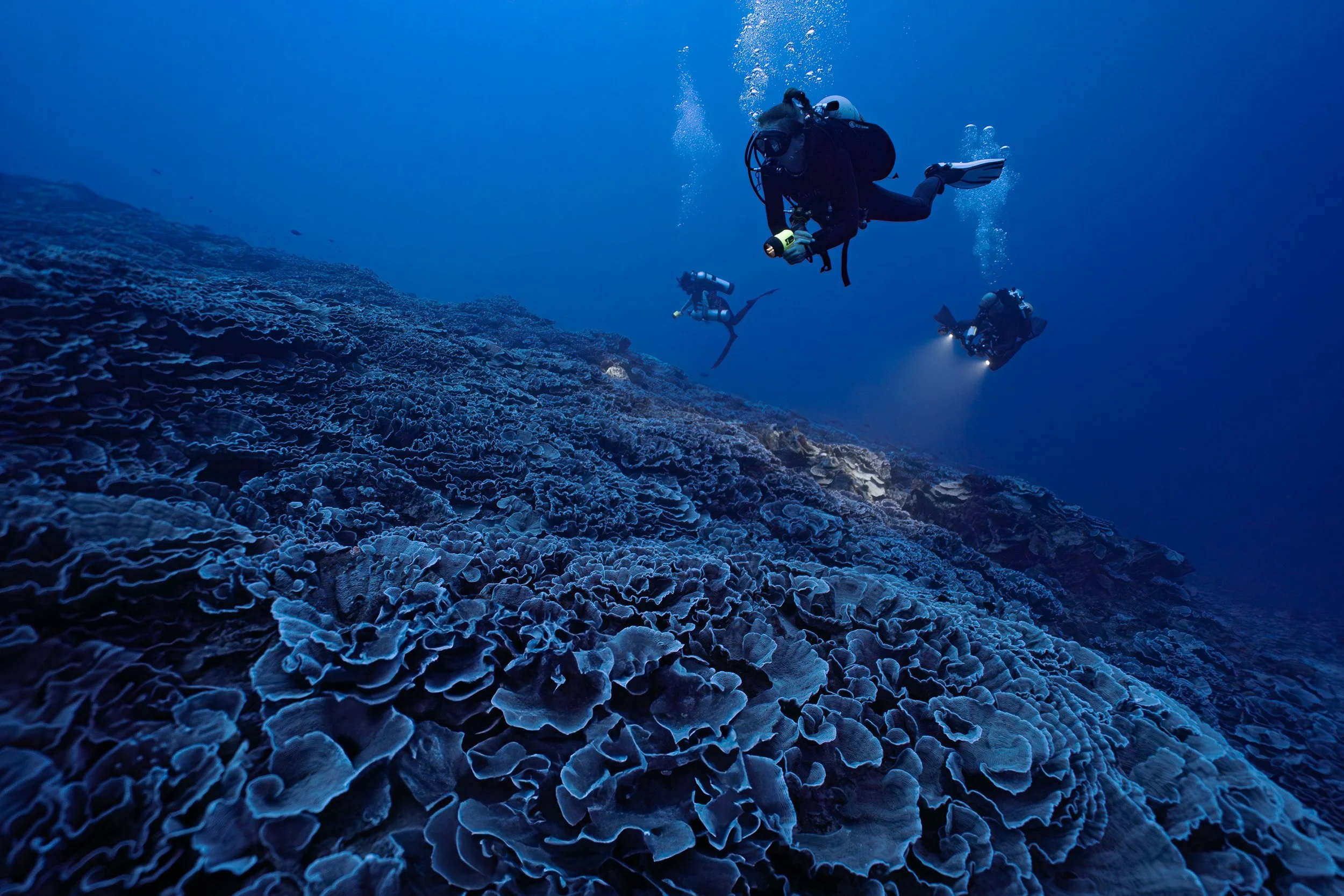
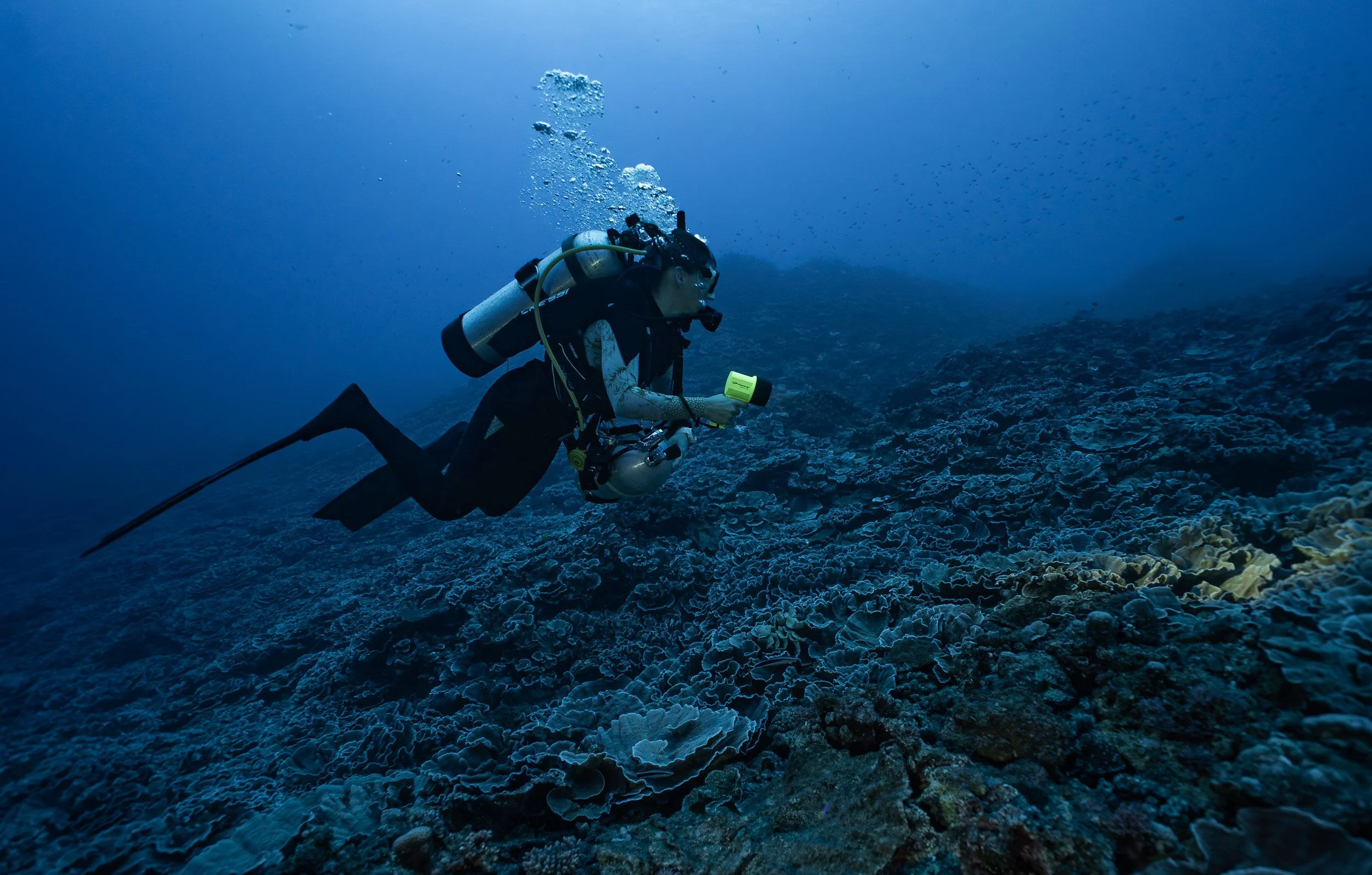
I joined my friends at Dive Rarotonga for a technical dive on a deep reef in Rarotonga, Cook Islands. We used open-circuit SCUBA with twinsets, staged bottles, and mixed gases to safely reach (and return from) mesophotic depths.
Rarotonga has a long and storied history of mesophotic reef exploration, shaped by pioneering expeditions from divers such as Chip Boyle, Jack Randall, Richard Pyle, Brian Greene, among others. These early dives were conducted on air—long before modern mixed-gas protocols became standard. As a result, divers were operating under extreme nitrogen loading, often heavily narced, while simultaneously pushing well beyond what we now recognize as safe oxygen exposure limits. It’s hard to overstate how bold (and, by today’s standards, risky) these profiles were, yet they produced foundational discoveries that still shape mesophotic reef science today.
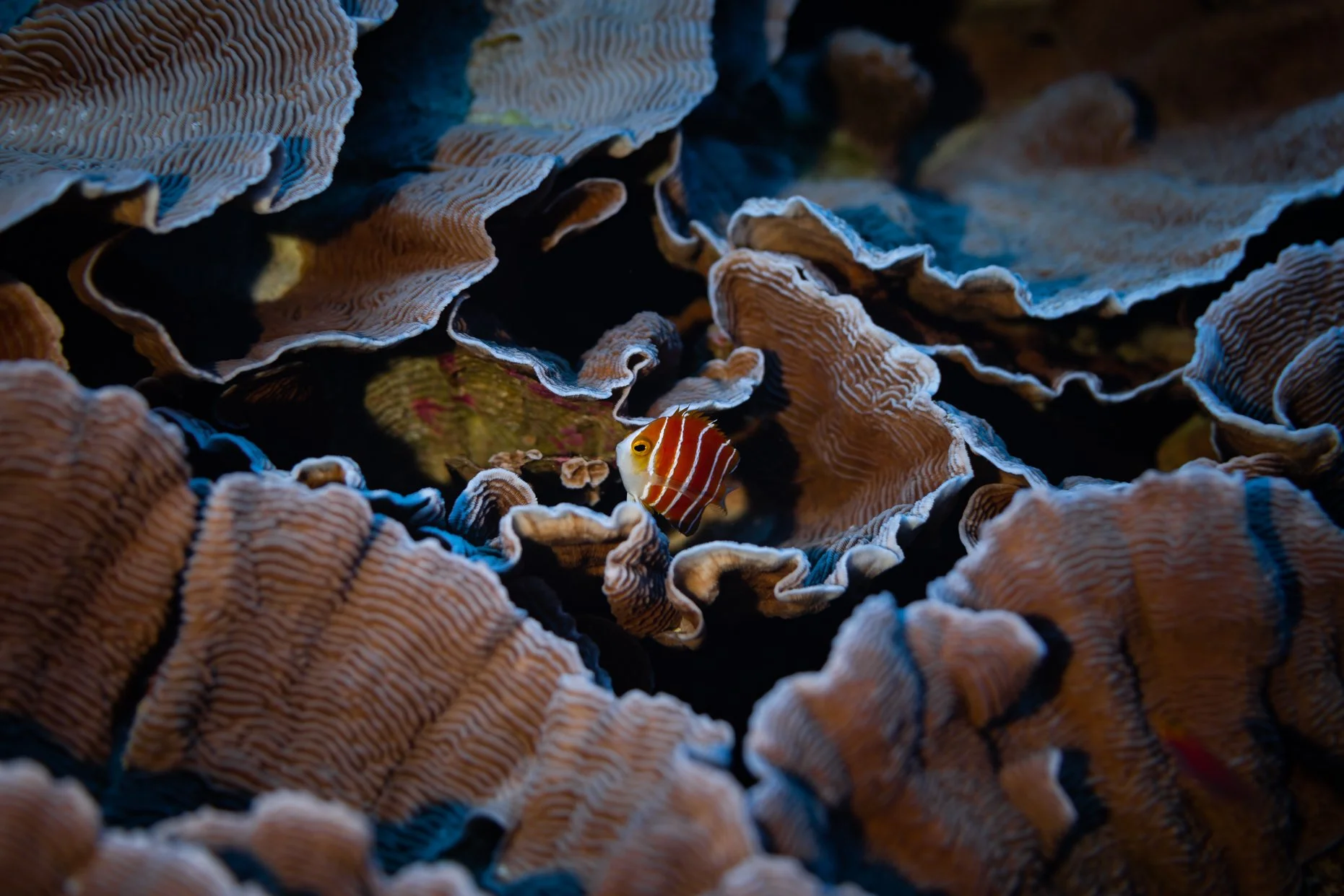
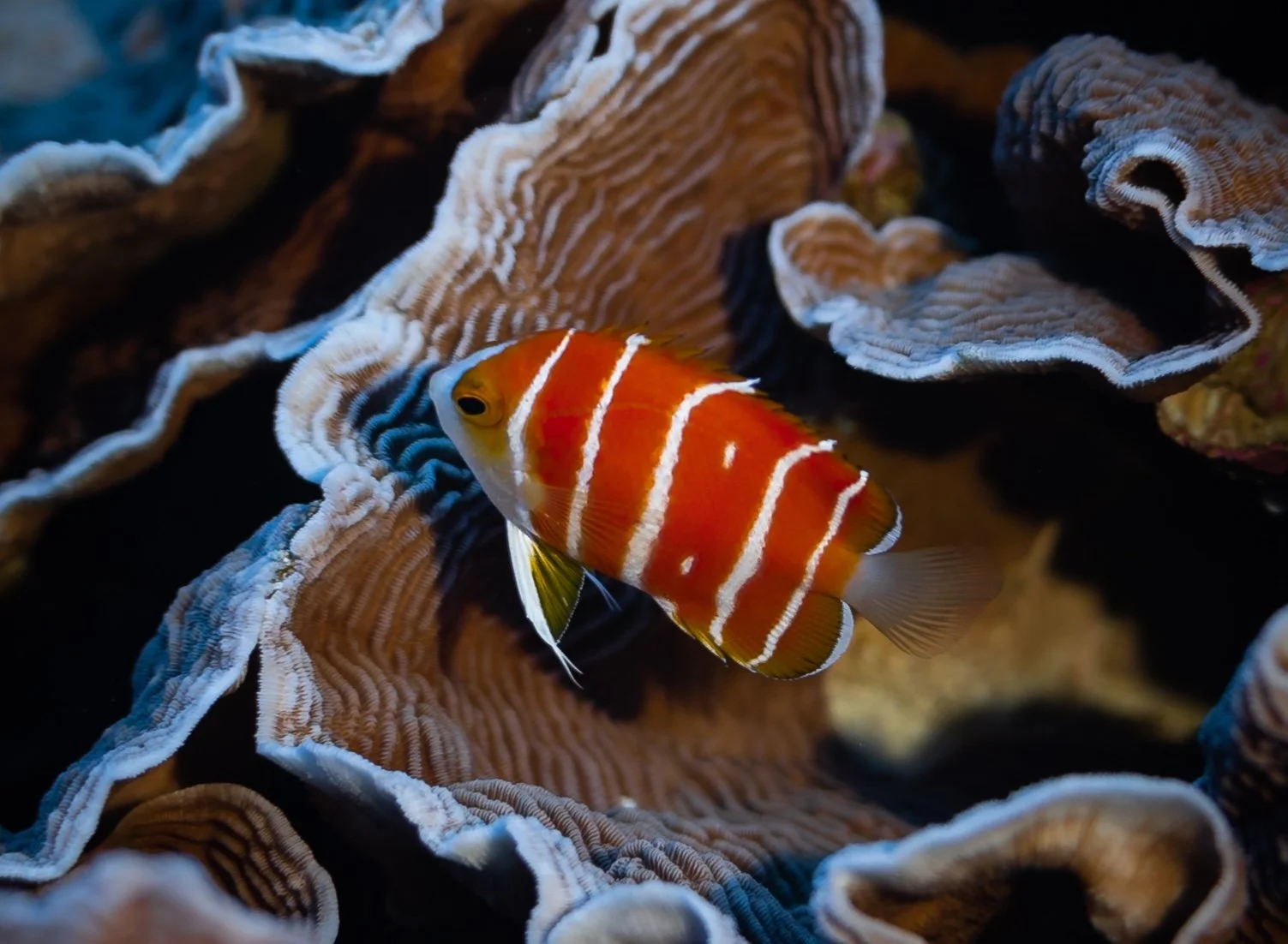
One of the most iconic discoveries tied to these deeper reefs is the peppermint angelfish (Paracentropyge boylei). First collected in the Cook Islands, this species quickly became legendary—not only for its striking red-and-white striping but also for its extreme rarity. Early specimens fetched prices exceeding $30,000 in the aquarium trade, making it one of the most expensive aquarium fish ever sold. Its depth range, typically beyond conventional recreational diving limits, is a big part of why it remained undiscovered for so long.
Closely tied to this is the story of the “narcosis angelfish,” later formally described as Centropyge narcosis. The name itself reflects the conditions under which it was first encountered—deep dives where nitrogen narcosis was a very real factor. It’s one of those species that sits high on the “still hoping to see” list for many deep divers. I haven’t encountered one yet, but Patrick Jaletzky at Adventure Cook Islands has seen quite a few—so there’s still hope!
Mesophotic Reef Life in Rarotonga
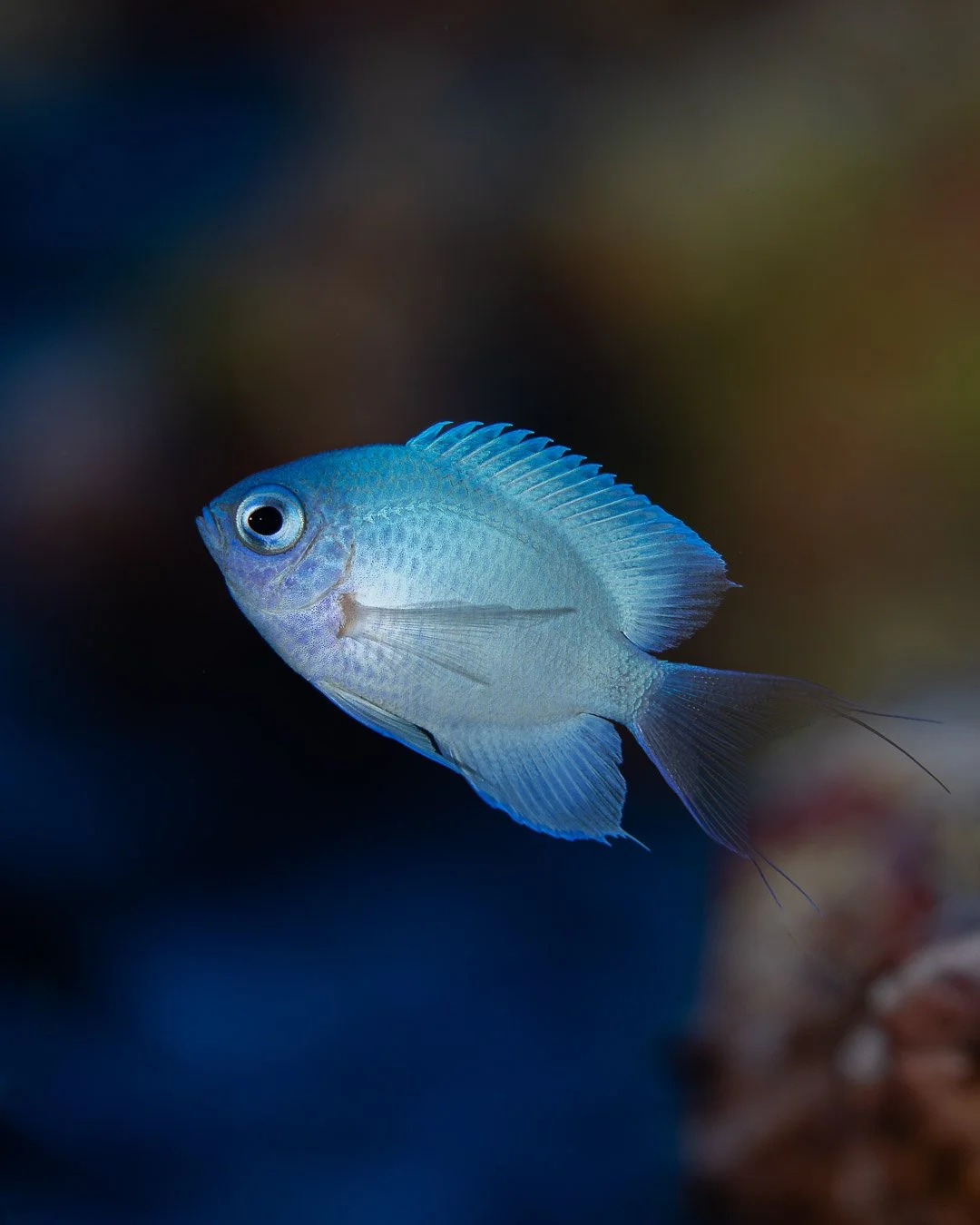
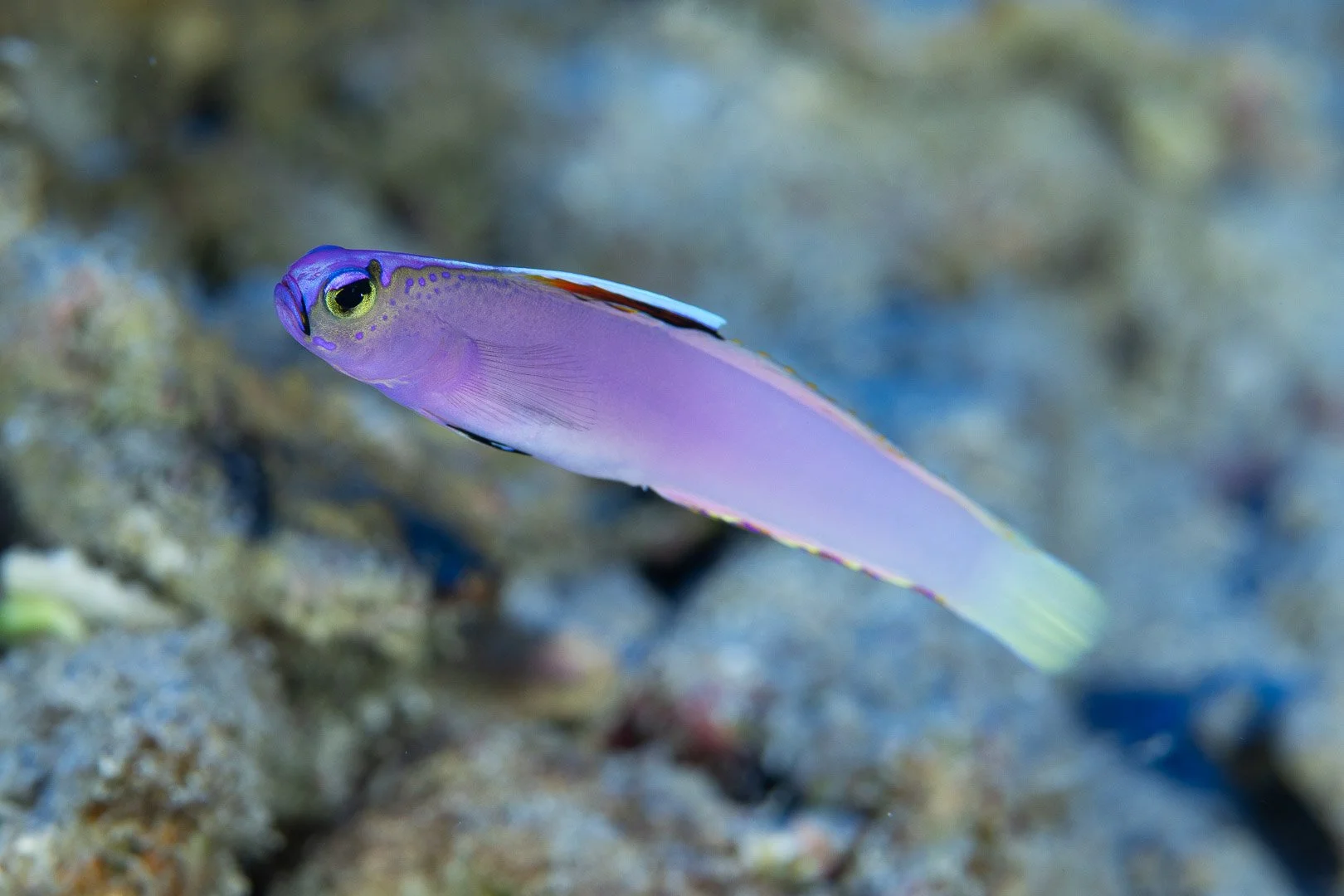
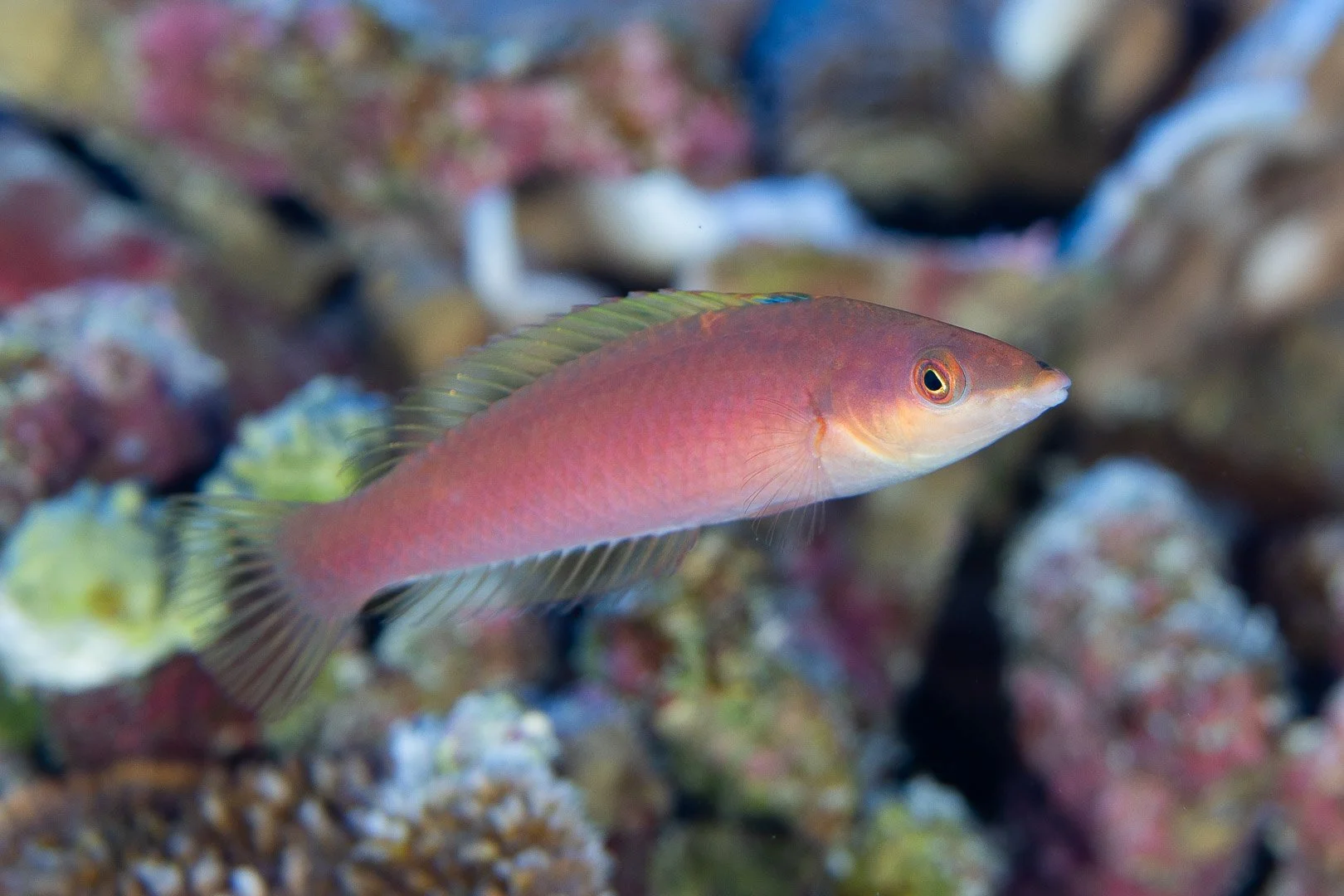
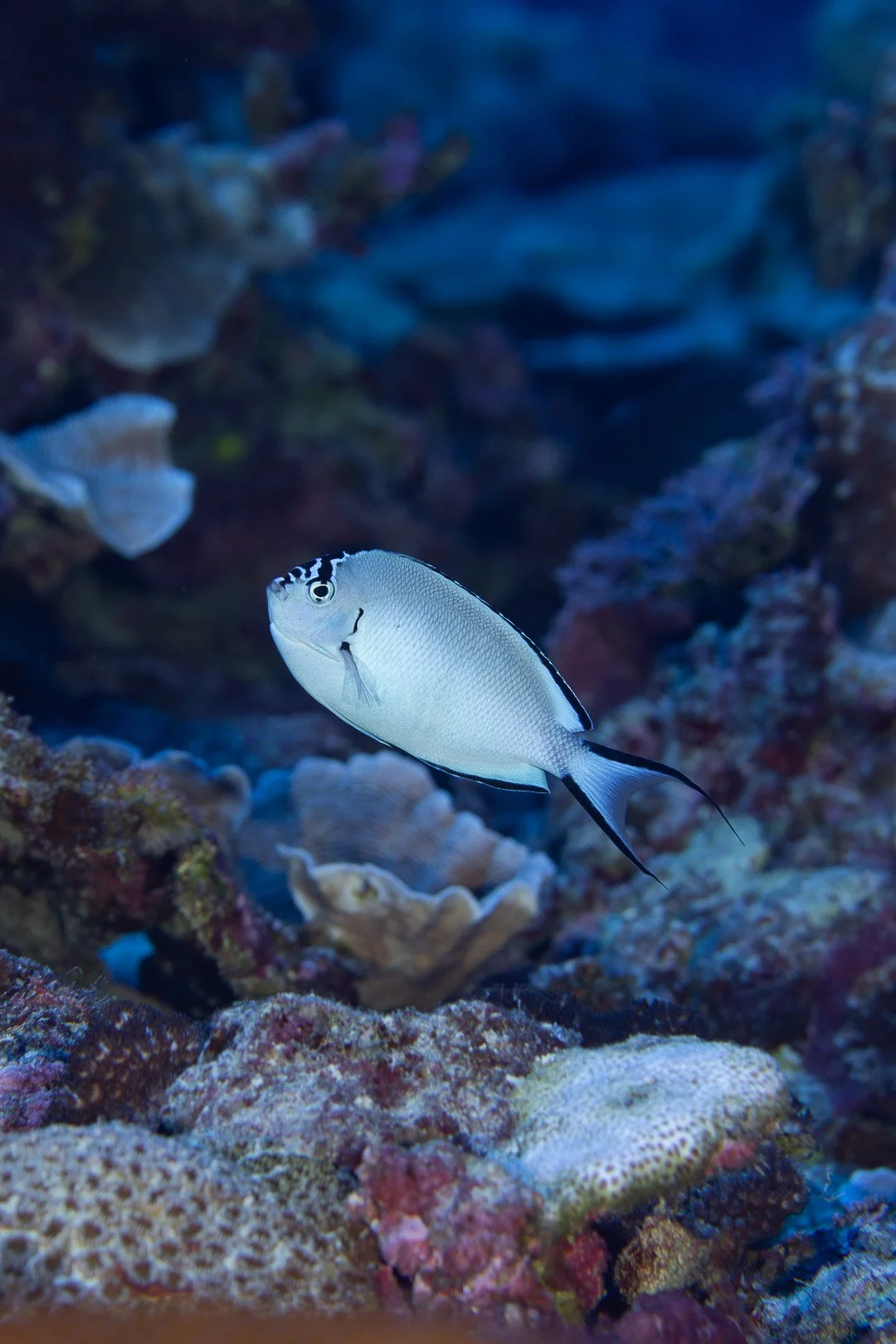
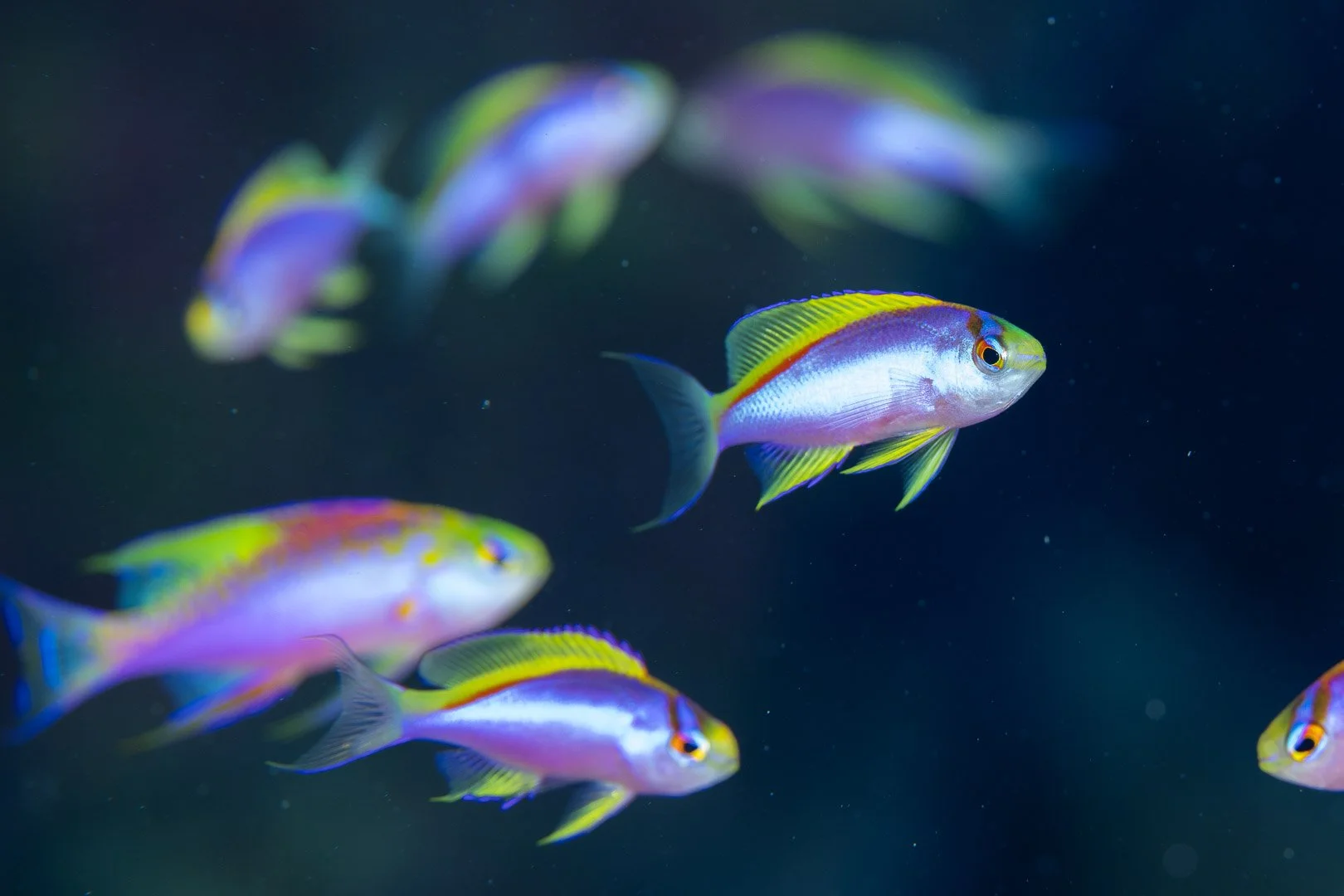
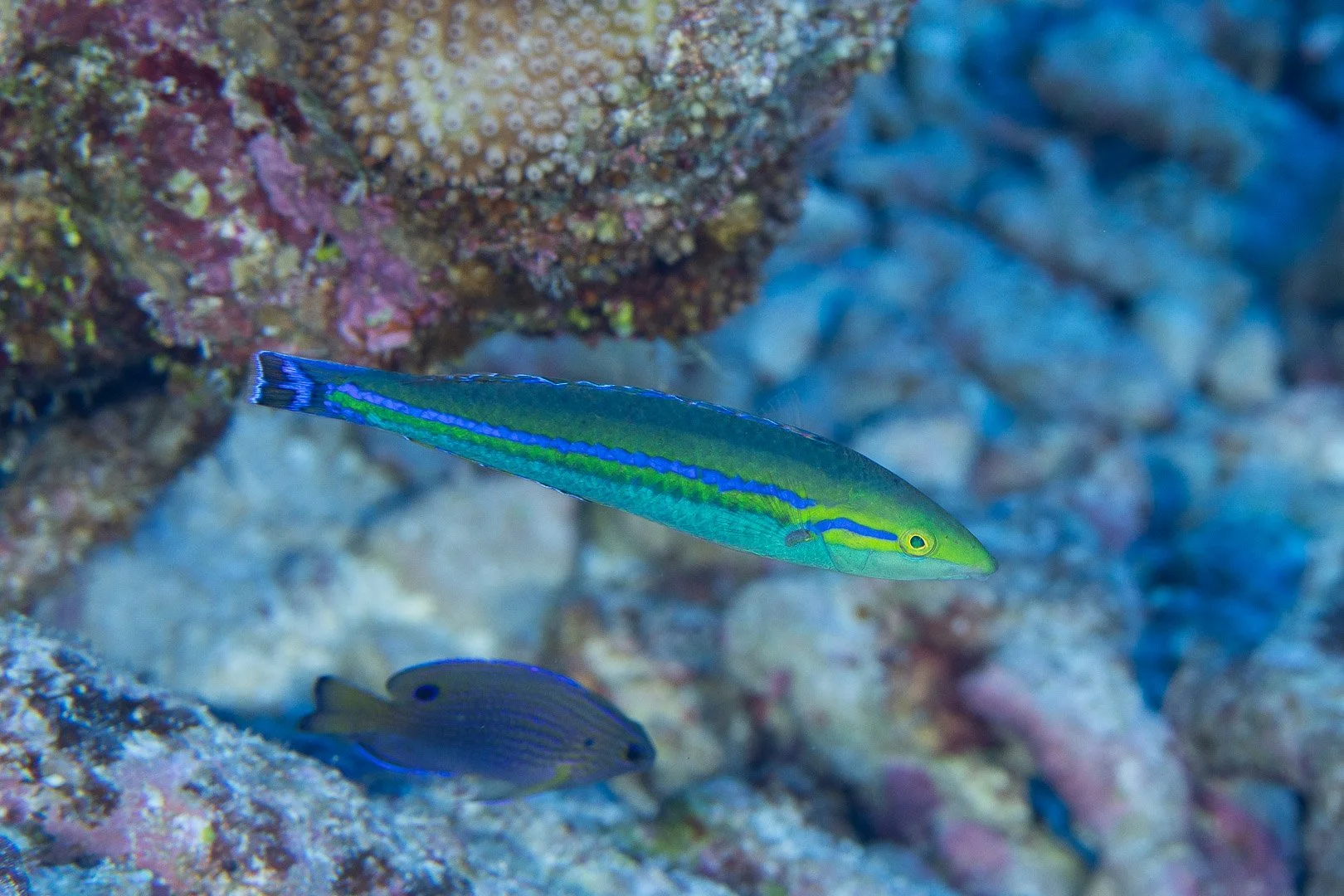
At depth, we encountered several uncommon and rarely observed species, including peppermint angelfish, Helfrich’s dartfish (Nemateleotris helfrichi), and a yet-to-be described species of damselfish (Pycnochromis?). Observations like these reinforce how incomplete our understanding of mesophotic ecosystems still is—particularly in relatively remote locations like the Cook Islands.
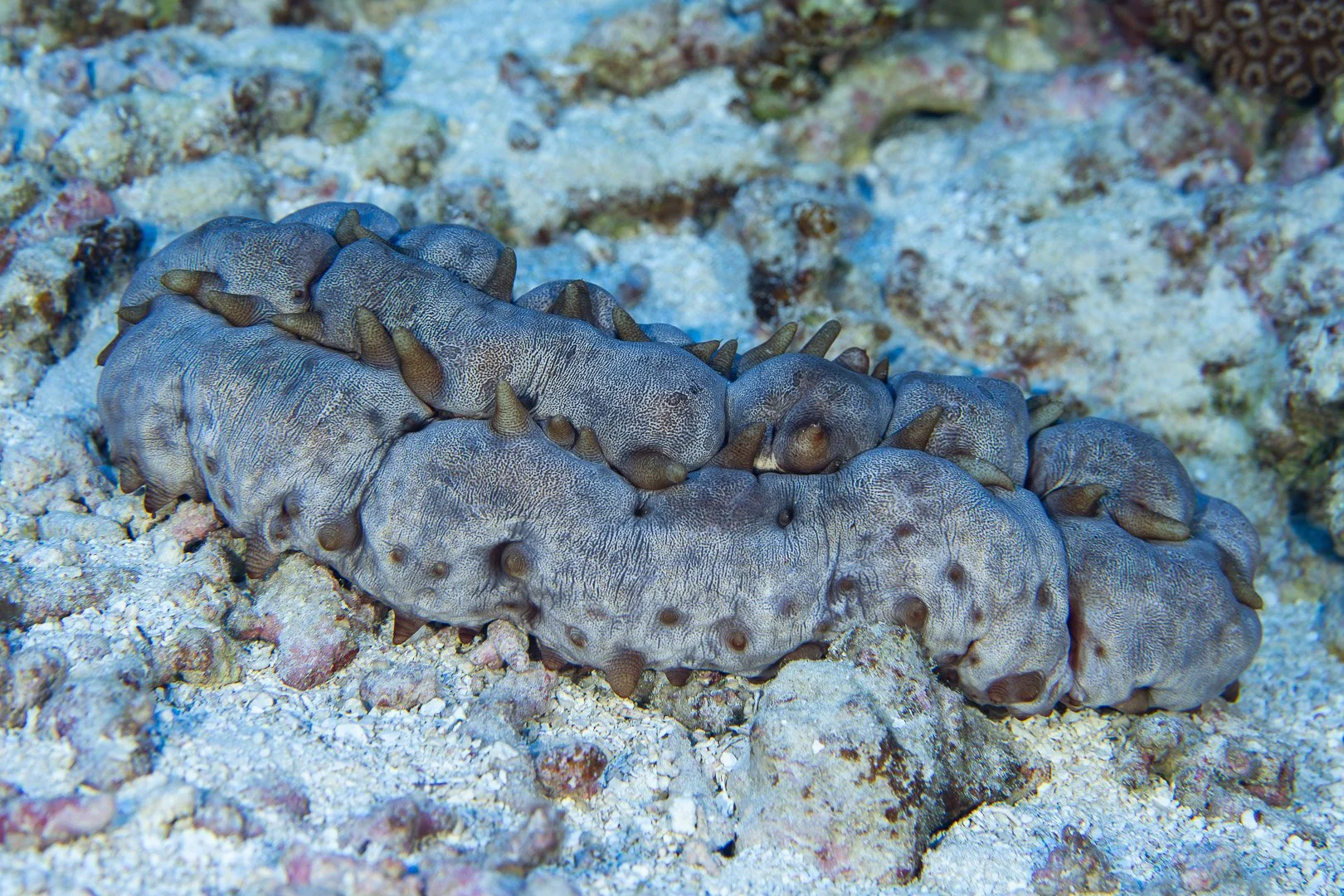
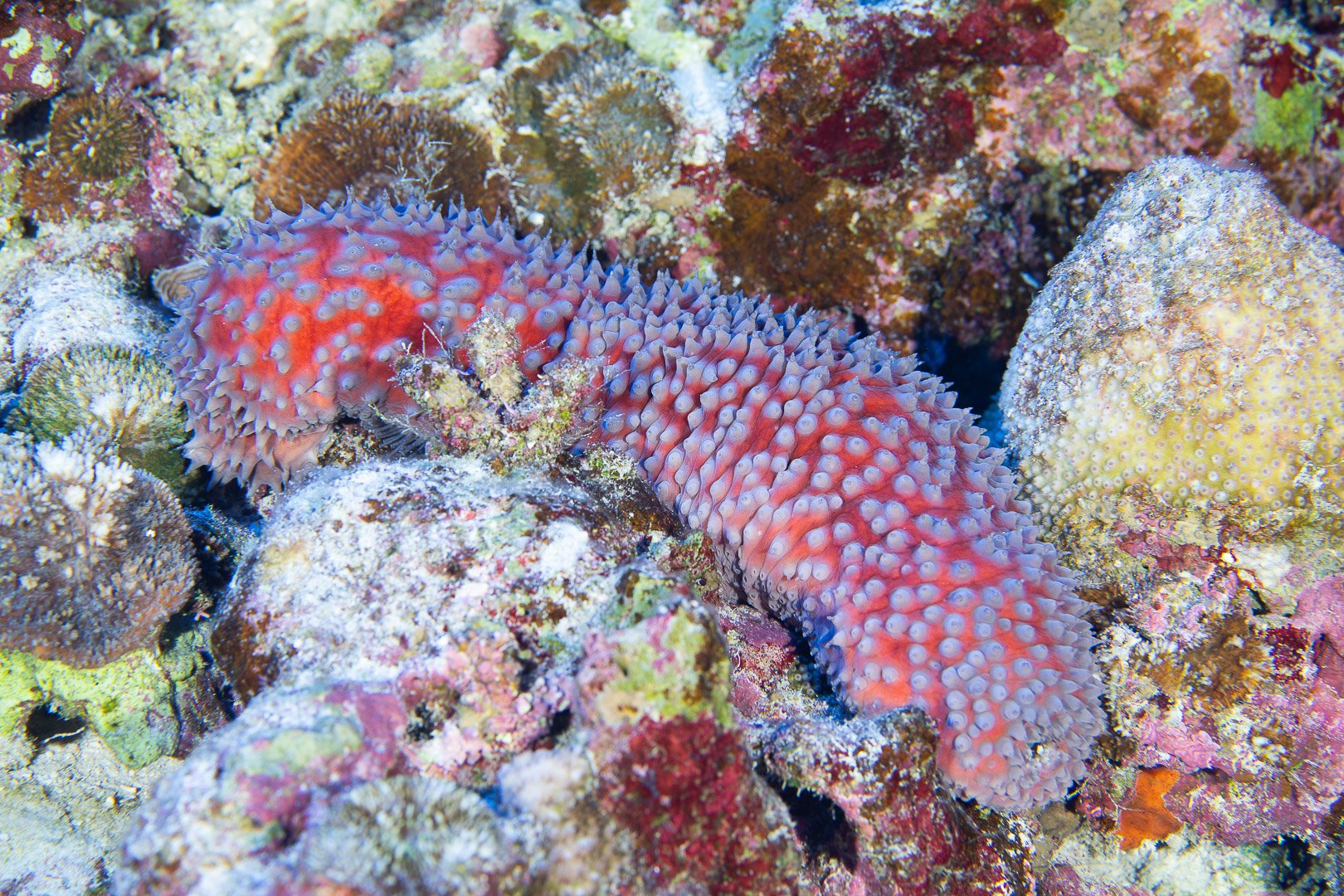
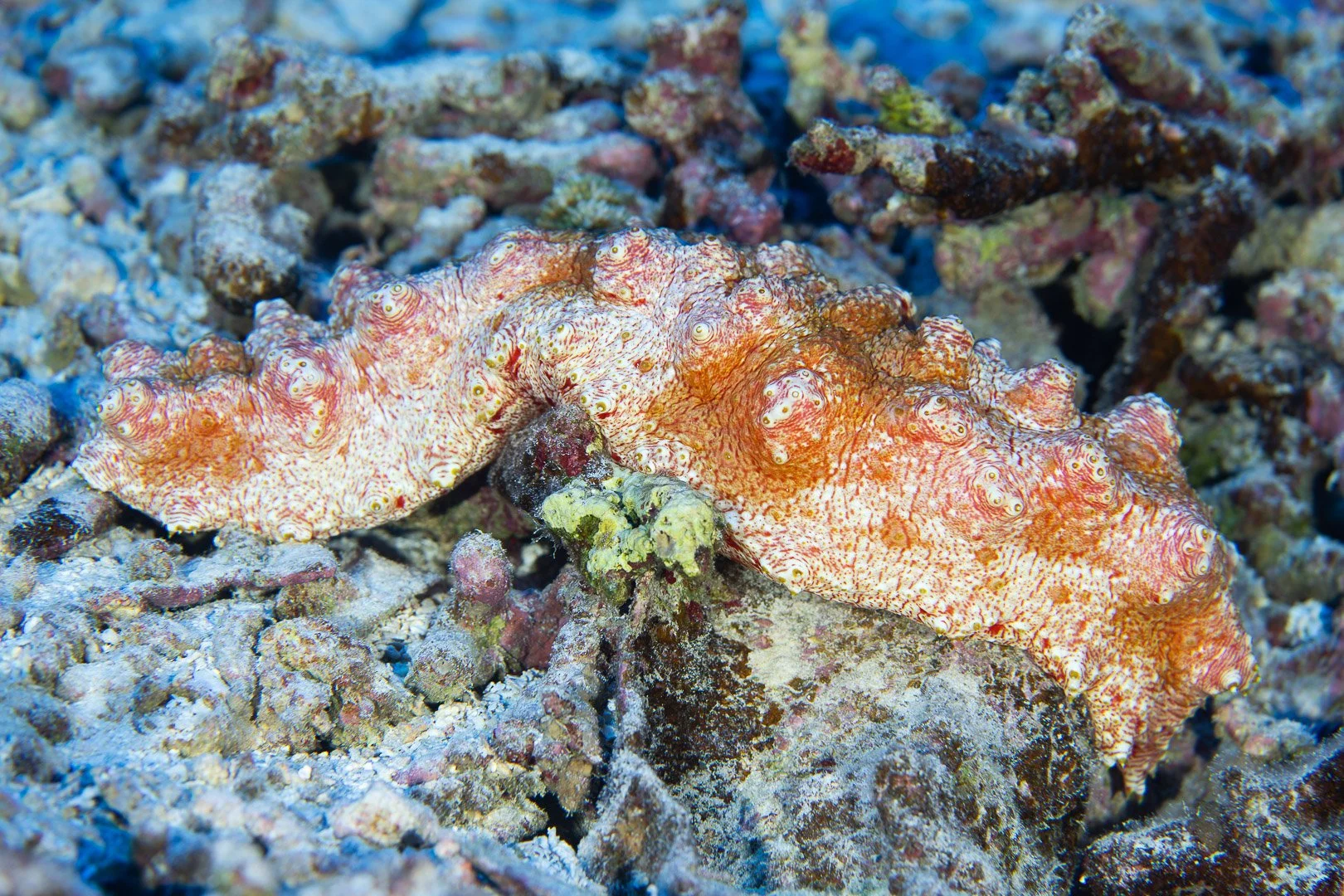
We also observed multiple species of sea cucumber that are rarely reported in scientific literature, some exhibiting unusual phenotypes. Whether these represent range extensions, phenotypic plasticity, or undescribed taxa would require genetic work to resolve—but it highlights how even relatively conspicuous benthic fauna remain under-documented at depth.
Coral Communities at Depth
At slightly shallower mesophotic depths, the reef transitioned into extensive fields of Pachyseris speciosa. These plate-like corals formed broad, layered structures across the reef, in some areas covering nearly 100% of the seafloor. This was the same reef first shown to me by Patrick of Adventure Cook Islands, and since those initial dives, we’ve begun a scientific study comparing light availability, temperature profiles, and coral bleaching dynamics between these deep reefs and adjacent shallow systems.
Similar large-scale formations of Pachyseris speciosa gained attention in French Polynesia—particularly around Tahiti—where researchers documented vast “rose garden” reef structures extending across kilometers of reef. These discoveries challenged assumptions about coral cover and reef structure in low-light environments.
The formations we observed in the Cook Islands appear comparably extensive, potentially rivaling those documented in French Polynesia. However, proper mapping and quantitative surveys would be needed to confirm their true spatial scale and ecological significance. If validated, these reefs could represent one of the more significant mesophotic coral assemblages in the South Pacific.
Technical Diving in the Cook Islands
Diving these depths requires careful planning, training, and specialized equipment. The team at Dive Rarotonga is fully equipped to support technical divers on both rebreathers and open-circuit systems, and they offer instruction for those looking to expand into technical diving.
Modern mixed-gas diving allows us to manage narcosis and oxygen exposure in ways those early explorers simply couldn’t. Looking back at the profiles from those initial expeditions really underscores how far the field has progressed—and how much of that progress was built on their willingness to push limits.
Final Thoughts
Mesophotic reefs in Rarotonga remain some of the least explored coral ecosystems in the Pacific. The combination of historical significance, rare and high-value species discoveries, and expansive coral formations underscores how much there is still to learn from these deeper environments.
Even with decades of exploration since the early work of Boyle, Randall, Pyle, and Greene, each dive continues to reveal something new—whether it’s a range extension, a behavioral observation, or a species yet to be described.
What I Offer
If you're interested in documenting deeper reef environments or technical diving expeditions, I offer:
underwater photography for technical dives
scientific and documentation-focused imaging
marine life and habitat photography